
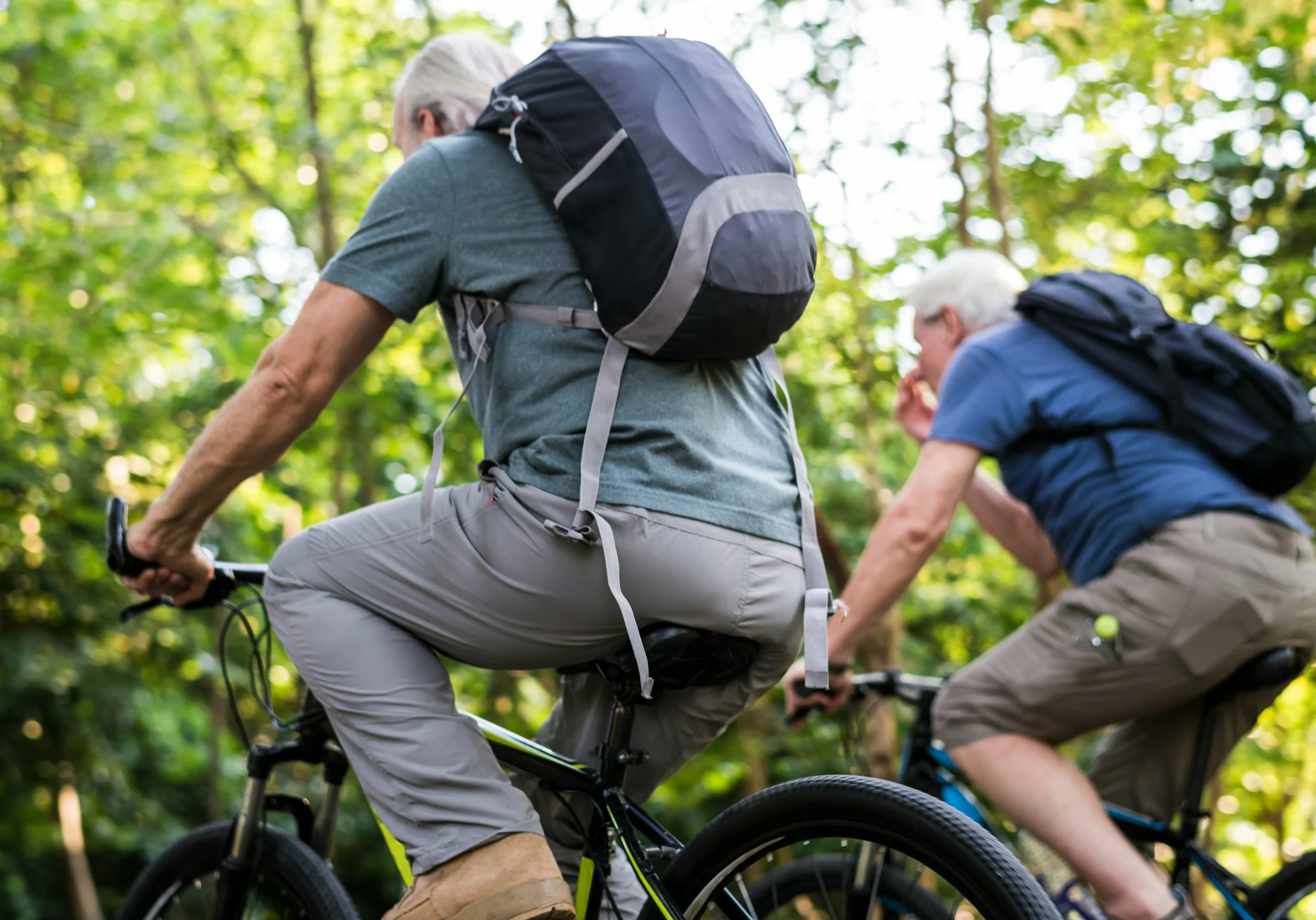
Walking has earned its place. It is simple, available, and deeply human. It asks for no complicated equipment. It can happen in a neighborhood, on a trail, through a park, around a block, or down a quiet road in the morning. It gives the body movement and the mind a different kind of room.
For many people after 55, walking becomes the health habit that feels most possible. That matters. A habit people can actually keep is more valuable than an ambitious program that disappears after two weeks.
Walking supports cardiovascular health, mood, circulation, joint motion, sleep rhythm, and time outdoors. It can be social or solitary. It can be gentle or brisk. It can be a way to think, reset, recover, or return to the day with a little more steadiness. None of that should be minimized.
The problem is not that walking is overvalued. The problem is that walking is often treated as complete.
The Flourish55+ team has been paying attention to how often people say, “I walk every day,” as though that sentence closes the question of physical readiness. It may answer one part of the question. It does not answer all of it.
Walking trains the body for steady, rhythmic movement. It is excellent at that. But life after 55 asks for more than steady movement. It asks for getting up and down. Carrying weight. Twisting carefully. Reaching overhead. Reacting to uneven ground. Climbing stairs. Managing fatigue. Catching balance when something unexpected happens. Moving through airports, parking lots, homes, yards, sidewalks, and unfamiliar places where the surfaces and demands are not always predictable.
A person can walk regularly and still become weaker. A person can walk daily and still lose balance confidence. A person can walk miles and still hesitate on stairs, struggle with a suitcase, or avoid getting down on the floor.
That is not failure. It is specificity.
The body becomes better at what it practices. Walking practices walking. It does not fully practice strength. It does not fully practice power. It does not fully practice reactive balance. It does not fully practice carrying, bending, pushing, pulling, or rising from low positions. Those capacities require different signals.
This distinction can be emotionally difficult because walking often becomes tied to identity. People are proud of walking. They should be. The point is not to take that away. The point is to protect walking itself by adding what walking does not provide.
A strong walker with poor balance is still vulnerable. A consistent walker with low leg strength may still struggle to rise from a chair without using the arms. A person who walks every morning may still be unprepared for a trip, a move, a fall, a caregiving task, or a long day that requires more physical variety than a walk provides.
Walking maintains motion. Strength preserves resilience. Balance preserves confidence. Mobility preserves options. None replaces the others.
One reason walking becomes the default is that it feels safe. It carries less cultural pressure than gyms. It does not require learning new equipment or being watched. It does not feel like an identity shift. It fits into life quietly.
That is exactly why it is so useful. It is also why people can over-rely on it. The easiest habit can become the only habit.
After midlife, the margin for error becomes more important. Recovery takes longer. A minor injury can interrupt routines for weeks. A fall can change the way someone moves through the world. The protective capacities are often the ones people do not think about until they are missing: leg strength, hip stability, grip, coordination, ankle mobility, reaction speed, and confidence on uneven surfaces.
These are not glamorous. They are not usually marketed well. But they matter.
The useful frame is not “walking is not enough, so walking is inadequate.” The useful frame is “walking is a foundation, and foundations need structures built on top of them.”
For some people, the next layer might be basic resistance work twice a week. For others, it might be balance practice, physical therapy, tai chi, water exercise, light hiking, carrying groceries intentionally, taking stairs when appropriate, or learning how to get safely down to the floor and back up again. The point is not the specific method. The point is exposing the body to more of the demands life still makes.
There is also a psychological component. When people only do what feels safe, the safe zone can shrink. Uneven ground becomes less familiar. Carrying weight becomes more intimidating. Small risks begin to feel larger. Confidence declines not always because the body is incapable, but because the body is underpracticed.
A wider movement life does not have to be dramatic. It may simply mean adding a few short sessions each week that ask the body for strength, balance, and variation. It may mean choosing the slightly uneven path when appropriate instead of always choosing the smooth one. It may mean practicing stairs, carrying, or controlled squatting in modest, safe ways.
The goal is not to make life harder. It is to make ordinary life easier.
Walking remains one of the best lifelong habits. It deserves respect. But it should not be asked to do every job. When walking is paired with strength, balance, and varied movement, it becomes part of a more complete way of preserving physical confidence.
That may be the better question after 55: not “Am I active?” but “Am I practicing the capacities my life still requires?”
There is dignity in walking. There is also dignity in recognizing its limits. The goal is not to diminish the habit. The goal is to make sure it is supported well enough to last.
This matters because walking is often the first place people return when they want to feel healthier. That makes it emotionally important. It is visible evidence that a person is still participating in their own care. It can also become a source of identity: the morning walk, the walking route, the walking partner, the familiar loop through the neighborhood. Those rituals are valuable. They should be protected.
But protection sometimes means adding support around the ritual. A person who wants to keep walking for years may need stronger legs, better balance, more stable hips, more confident feet, and enough upper-body strength to handle ordinary life around the walk. The walk is not separate from the rest of the body. It depends on the rest of the body.
The Flourish55+ team is especially interested in this distinction because it avoids two unhelpful messages. One message tells people that walking is all they need. The other tells them that walking is too modest to count. Neither is quite right. Walking counts. It counts a great deal. It simply should not carry the entire burden of physical independence.
A more respectful message is this: keep walking if walking serves you. Notice what else life asks of your body. Then consider whether one or two additional forms of movement could help preserve the confidence walking alone does not fully protect. That is not a program. It is a way of paying attention.
It also gives the reader a calmer way to assess future advice. If a shoe, class, device, program, or walking group genuinely helps someone move with more confidence and consistency, it may be worth attention. If it only sells the feeling of activity without supporting broader capacity, it deserves more skepticism. That distinction will matter as we keep looking into what actually helps people remain active after 55.
Recommended reading
· National Institute on Aging: Exercise and Physical Activity
· Centers for Disease Control and Prevention: Physical Activity Basics for Older Adults
· Physical Activity Guidelines for Americans: Older Adult Recommendations